bioERGOtech builds digital scientists: software agents built inside real clinical problems.
We start from a question someone already has and could not answer, build the smallest system that tests it, and publish what we find.

In a five-year national cohort study, cancer risk after a diagnosis of immune-mediated inflammatory disease was highest in the first year and fell steadily after it. The shape of that decline points at inflammation rather than at treatment.
Cancers 2026;18(6):1027 ↗What we are trying to find out
In every programme below, the answer already existed in data somebody already held. What was missing was the time and the method to get it out.
A national cohort sat in hospital discharge records for five years before anyone joined it up. A hospital sees a medicine it should have switched a year after the window closed. A tumour board's evidence is in a guideline nobody had the evening to read.
The moonshot
That the distance between a question somebody has and an answer they can defend collapses from years to days.
- 1
Can we say, years ahead of a diagnosis, which subgroups carry which risk, and why?
- 2
Can a model stand in for an experiment that is too slow, too small or too expensive to run?
- 3
Can a group of patients too small for the statistics still be learned from?
- 4
Can an organisation act on what it already knows, inside the year it matters?
- 5
Where is the line between software that informs a clinical decision and software that makes one?
Research
Six programmes, each listed at the stage it has actually reached. Two are complete, one is waiting on a regional approval, and three are live. Every card opens a case study stating what the work does not do and what has not been established.
Cancer risk after an inflammatory disease diagnosis
356,022 patients across five years of Italian hospital discharge records. Which cancers, how much more often, and when in the disease course.
Read the case study →Which subgroups carry which cancer risk
Genotype, lifestyle and socioeconomic data read together at population level. One of the algorithms delivered under CODIGE. Population associations, never an individual risk score.
Read the case study →An agent that prepares the evidence for a tumour board
A clinician enters a case, the agent searches published AIOM and ESMO guidance and returns one page the panel can read in the room. Built with an Italian local health authority. The pilot is waiting on regional approval and the agent is not in use in care.
Read the case study →An agent for the gap between rheumatology visits
Months pass between outpatient visits, and every visit begins from a reconstruction by memory. What is worth capturing in between, and does capturing it change the next one.
Read the case study →A compass for hospital medicines spending
A hospital already holds every figure it needs to see where value is leaking. It is not organised in a way that points anywhere. This reads the flows an authority already produces and points at the molecule, the channel and the ward where the money is going.
Read the case study →A pipeline for patient groups too small to analyse
When a disease affects a handful of people in a country, the statistics built for thousands stop working. We are testing what can still be learned from a cohort that small, starting with propionic acidemia in Saudi Arabia.
Read the case study →How we work
The same three steps every time, whatever the field.
Someone brings a problem they own
A clinician, a discovery scientist or a pharmacy lead who has the problem and could not solve it. Not a technology looking for an application.
We build the smallest thing that answers it
Documented, versioned and evaluated. What was not evaluated is written down next to what was, because a reader cannot tell the difference otherwise.
What works goes to market
A programme is completed when its question has been answered. Where the answer is useful beyond us, the route out is a publication, a tool other groups can run, or a company.
Published work
Peer reviewed, and checkable without asking us. Every entry resolves from its DOI.
Modelling sex differences of neurological disorders in vitro
Castro-Aldrete L, Einsiedler M, ... Putignano G, ... Santuccione Chadha A
doi:10.1038/s44222-025-00355-w ↗Cancer Association in Patients with Immune-Mediated Inflammatory Diseases: A Five-Year Nationwide Italian Cohort Study
Giordani B, Pirtoli L, Putignano G, Giordano A, Marotto D, Baglio G
doi:10.3390/cancers18061027 ↗Mathematical models and computational approaches in CAR-T therapeutics
Putignano G, Ruiperez-Campillo S, Yuan Z, Millet J, Guerrero-Aspizua S
doi:10.3389/fimmu.2025.1581210 ↗What you can work with
The problems come first: everything else exists to get them solved. The badges indicate what the Foundation provides directly and what the community makes available.
Clinical questions to work on
Real problems brought by clinicians and research centres, with the institution that posed them named.
Instruments and lab space
Shared equipment you can apply to use, with a short statement of what you intend to do with it.
Compute
Capacity for model training and biomedical data analysis.
Funding you can apply for together
Hands-on support on NIDI, Mini-PIA, PIA, ZES and European calls.
Regulatory and clinical advisors
Guidance across regulatory strategy, clinical development, IP and commercialisation.
Working space
Offices, meeting rooms and operational space opened up by members.
Where we work
One operational home today, and two locations in development. Taranto is where the work happens now.
Taranto
OperationalOur founding home, with a physical Startup Hub and the Distributed Lab. A Special Economic Zone with real tax benefits.
Zurich
In developmentA strategic hub for European and international partnerships, embedded in one of the world's leading life-sciences ecosystems.
Riyadh
In developmentA strategic presence aligned with Vision 2030, opening access to a fast-growing Saudi healthcare market.
Recent updates
A selection of recent milestones from across the ecosystem.

Founding Edition newsletter is live
Our launch, research pillars, first members and upcoming events.
Read more →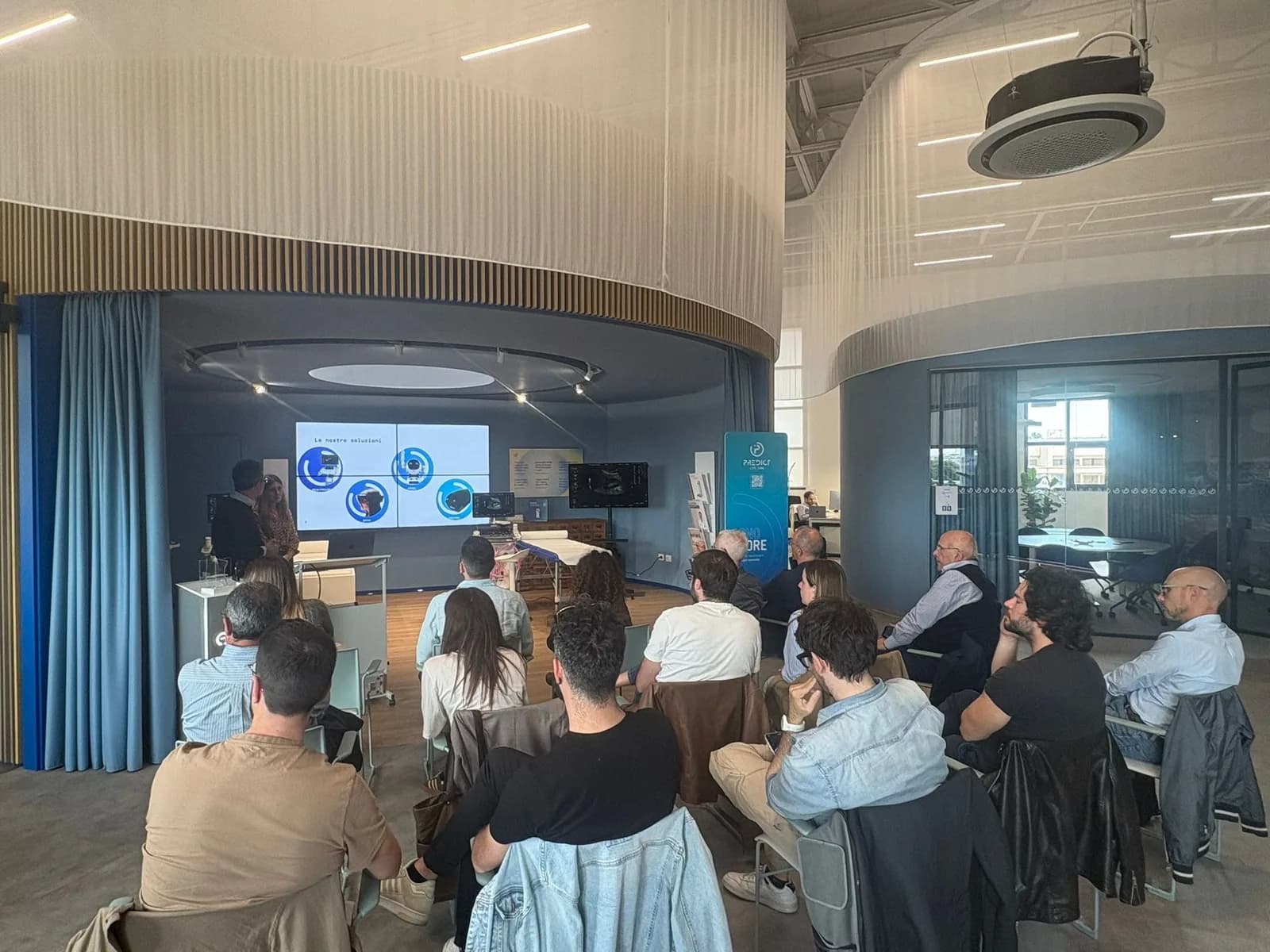
Predict Healthcare joins the Foundation
The Apulian leader in in-vivo diagnostics and imaging joins the ecosystem.
Read more →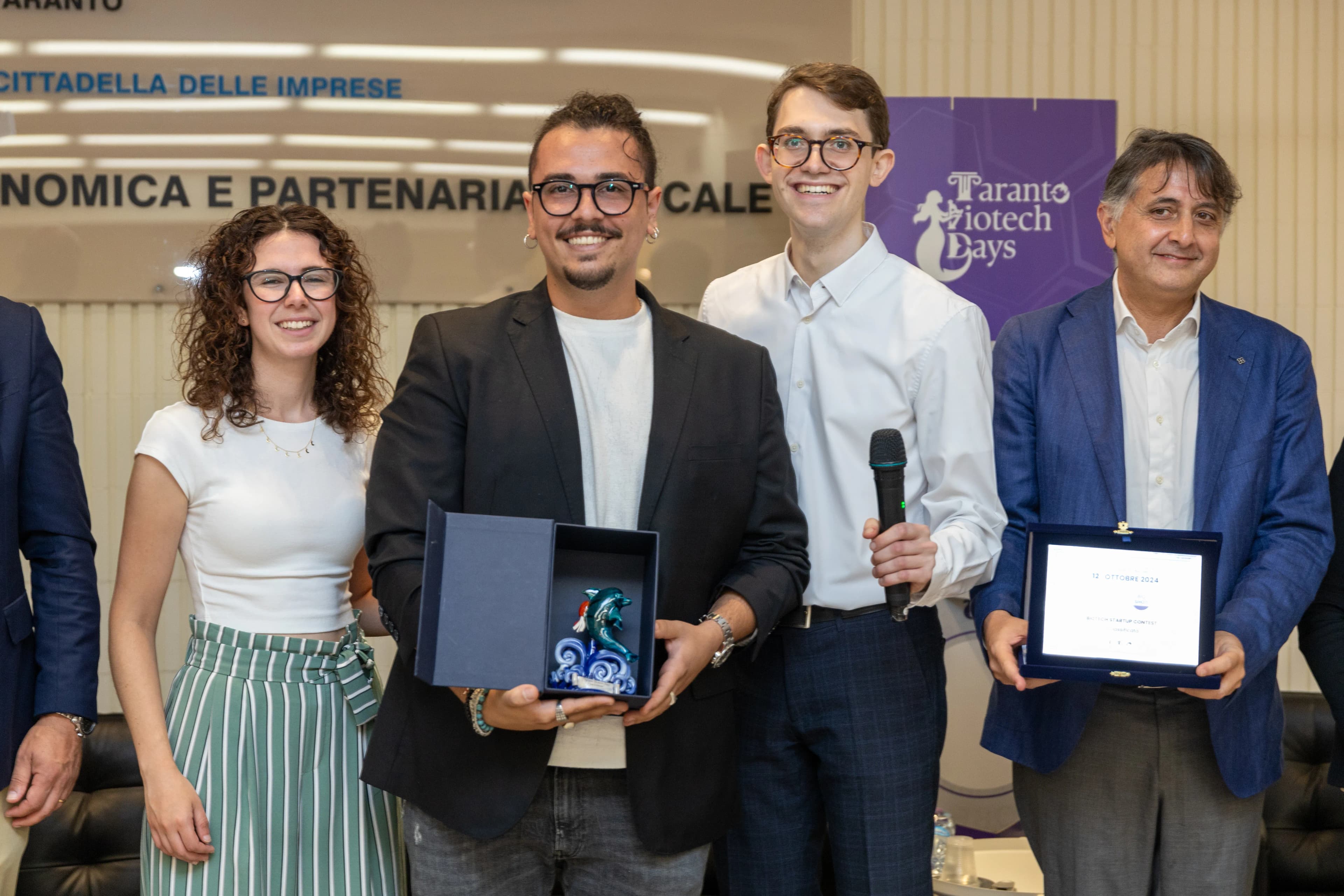
GenoGra closes €1M pre-seed round
An Italian portfolio startup scaling toward clinical genomics.
Read more →Who made it?
The first members of the Foundation, already building alongside us. More to come soon.
 Active member
 Active member
 Active member
 Active member
Learn to build AI agents
A free 10-week programme for high school students. Go from understanding what AI agents are to building and demonstrating a working prototype. No prior coding experience required.
Agentic AI High School Innovation Program
Build real AI agents that solve genuine problems. Choose your track: no-code, low-code, or full-code. Earn a verified certificate on completion.
Start learning →Vivere più a lungo: sport e intelligenza artificiale
Due giornate con scienziati, medici e campioni dello sport. Iscrizione gratuita, posti limitati.
Frequently asked questions
Five open questions, and we cannot answer them alone.
We are looking for co-investigators, cohorts to replicate on, and clinical partners who have a problem they own. If one of the programmes above is close to something you work on, write to us.